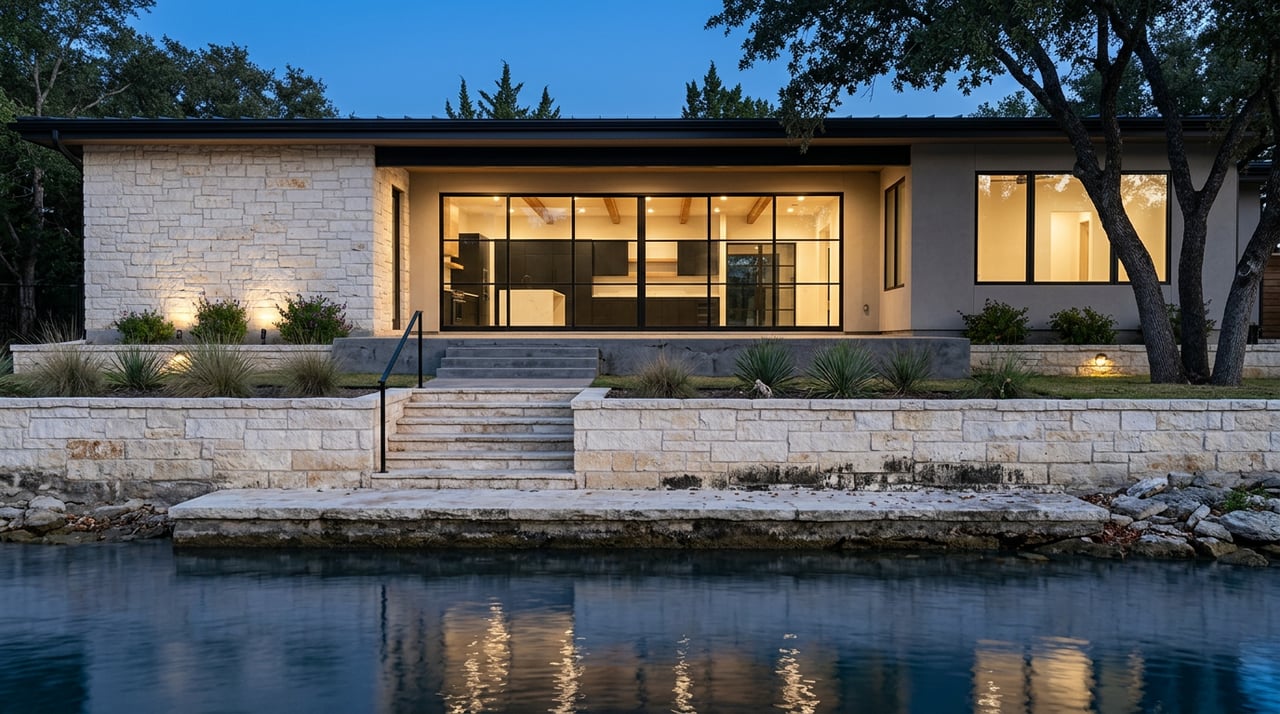
Winning In A Tight Inks Lake Market: Strategies For Waterfront Buyers
March 24, 2026
March 24, 2026
You refresh listings, blink, and the best Inks Lake waterfront is already pending. If that sounds familiar, you are not alone. Inks Lake in 78611 is a small, coveted stretch of water where true waterfront rarely hits the open market. In this guide, you will learn why inventory is tight, what pricing and timelines look like, how LCRA rules affect your plans, and the exact steps serious buyers use to win in a competitive environment. Let’s dive in.
Inks Lake is physically small. It covers roughly 800 to 830 surface acres with a regulated conservation pool around 888 feet in elevation, and a shoreline of about 20.5 miles. This limits how many private, developable waterfront parcels even exist. You can review lake details on the Texas Parks and Wildlife Inks Lake page.
Public holdings further reduce private frontage. Inks Lake State Park occupies a meaningful share of the shoreline, removing that frontage from private sale and concentrating public access in those zones. A Texas survey source notes the park accounts for about 30 percent of the shoreline, which explains why so few parcels trade each year. See the cited shoreline context in the Inks Reservoir fisheries management report.
Local oversight shapes what owners can build. The Lower Colorado River Authority (LCRA) manages submerged lands and regulates docks, marinas, and certain shoreline activities. That means new or improved docks, dredge and fill, and some shoreline structures require permits and adherence to specific standards. These rules are important and add time and cost to many projects. Review LCRA’s boat dock safety standards and guidance for context.
Finally, turnover is low. Some shoreline is tied up in long-held family properties or seasonal/institutional uses, and it does not come to market often. Camp Longhorn, a longstanding lake institution, adds seasonality to local showings and access during its summer terms. You can see term dates and visitors’ days on the Camp Longhorn schedule.
True Inks Lake waterfront is a niche inside the 78611 market. At any given time, public portals focused on lakes may show single-digit to low double-digit active waterfront listings on Inks Lake. General real estate sites often mix in off-water properties or wider map areas, which can distort counts. The key is to track true waterfront precisely.
Expect a strong waterfront premium. Recent snapshots on a lake-focused portal place active Inks Lake waterfront listings in the low to mid seven-figure range, while broader Burnet County and the 78611 zip often show medians far lower. This gap reflects location on the water and the limited supply. For a current, lake-specific snapshot, check the Inks Lake page on LakeHouse and confirm with fresh MLS comparables.
Timelines can diverge. Because the right property is rare, you may search for months while monitoring both on- and off-market channels. Yet when a well-priced, well-presented waterfront home appears, it can go under contract quickly, sometimes in days. Plan your financing and inspections so you can execute fast when the right fit surfaces.
LCRA dock and marina standards. Dock construction and placement follow LCRA safety and spacing rules, and in some zones there are limits on how far structures can extend into the lake. If a future dock, lift, or reconfiguration is part of your plan, study the dock safety and registration guidance before you write an offer.
Dredge and fill permitting. Shoreline alterations usually fall under the Highland Lakes Dredge and Fill Ordinance, which sets permit tiers and technical requirements. Even small-scale work can require approvals, contractor coordination, and lead time. Review the LCRA Dredge and Fill Ordinance to gauge scope and timing.
Septic rules at transfer. LCRA is the authorized agent for on-site sewage facilities in the Highland Lakes watershed. In LCRA jurisdiction, a change of ownership typically triggers an OSSF reinspection and approval. Budget for reinspections and possible repairs or replacement. Read the LCRA OSSF program so you can set the right contract contingencies.
Lake lowerings are rare, valuable windows. LCRA occasionally lowers lakes to allow dock and shoreline work. Inks Lake was scheduled for an eight-week drawdown in October to November 2025, which created an unusual inspection window to view docks and bulkheads at lower water. Watch for LCRA lake-lowering notices and plan evaluations around them when possible.
Seasonal access and traffic. During Camp Longhorn’s summer sessions, local traffic, boat activity, and privacy protocols can affect showing times. Coordinate visits around the camp’s posted calendar to avoid conflicts and ensure full access for inspections.
Start with full pre-approval and clear proof of funds. Sellers of rare waterfront expect serious, well-documented buyers who can close. Given the uniqueness of many lakefront homes, discuss appraisal-gap planning with your lender early, especially if your offer will include financing.
Build a local, lake-experienced team. You will want a Highland Lakes agent, a title partner familiar with riparian and easement issues, a surveyor who knows historic plats, an OSSF inspector or designer, and a marine contractor to evaluate docks and bulkheads. LCRA permitting and septic rules are specific, so choose pros who work these files regularly. Start gathering permitting histories and records as soon as a target property appears.
Use public listing alerts, agent dashboards, and lake-focused portals to catch anything that goes live. Then add a proactive, off-market layer. Your agent should monitor quiet conversations, office-exclusive opportunities, and owner outreach within the boundaries allowed by MLS rules. NAR’s Clear Cooperation policy shapes how and when listings must be shared with the MLS, but private, permission-based introductions still occur.
Create your own owner list. Use county appraisal tools to identify parcel owners and mailing addresses, then send discreet letters stating your interest and parameters. The state’s directory links you to local appraisal resources. Start with the Texas Comptroller’s Burnet County page to locate the CAD.
Lead with execution strength. Pair a competitive price with short but sensible deadlines, verified funds or a lender letter with contact info, and clear terms that match the seller’s preferred timing. Define any escalation language carefully. If financing, pre-negotiate appraisal-gap terms so there are no surprises later.
Control risk without overreaching. In this market, you can be fast and clean while still protecting yourself. Consider a brief option period focused on safety and major structural defects, a septic reinspection contingency for LCRA approval where required, and a specific window for a marine contractor to review the dock and shoreline with an estimate in writing. Avoid waiving vital inspections unless you can comfortably assume the risk.
Pre-schedule critical inspections. If you know a property is within LCRA OSSF jurisdiction, reserve time with an OSSF inspector as soon as your offer is accepted. Do the same with a trusted marine contractor. Ask the seller early for any known LCRA permits or previous approvals for docks or shoreline work. Showing both preparedness and respect for the rules can make your offer more attractive.
If LCRA announces a drawdown, use it. Low water exposes underwater portions of docks and bulkheads, and it allows easier contractor access with the correct registrations and permits. Monitor lake-lowering announcements and plan accordingly.
Respect seasonal calendars. During peak camp sessions and visitor days, coordinate showings around higher traffic times. Checking the Camp Longhorn calendar before you schedule can save time and ensure smoother access for inspectors.
Use this list to stay focused once the right property appears.
You are competing in a small, rules-driven, legacy shoreline market. The buyers who win are prepared financially, versed in LCRA requirements, tuned to seasonality, and active in both public and private channels. If you combine those elements with a disciplined offer strategy and a team that lives the Highland Lakes every day, you put yourself in position to land the right waterfront property, not just chase it.
If you want a quiet, curated path to on- and off-market opportunities on Inks Lake, reach out. For confidential guidance, private introductions, and a focused plan tailored to your goals, connect with Kody Hall.
Stay up to date on the latest real estate trends.






Partnering with an acclaimed real estate professional is crucial to navigate the complexities of the high-end market. The luxury sphere requires vast knowledge of private sales and precision-level marketing tactics, all while maintaining client confidentiality throughout the process. Hall Realty Group provides forward-thinking processes that encompass the highest level of attention to detail. For sellers, it's imperative to analyze off-market comparables and exclusive market trends, both of which are not publicly available. In order for a buyer to achieve success, the client must be aware of exclusive listings not broadcast on the open market. These aspects complement our extensive network, directly correlating to the success of our clientele. HRG possesses superior negotiation skills honed through experience in dealing with high-value transactions. Kody understands the art of negotiation in the luxury market, including how to navigate complex offers, handle multiple bidders, and advocate effectively on behalf of their clients. HRG has a deep understanding of the luxury lifestyle and effectively communicates tailored strategies needed for the desired result.