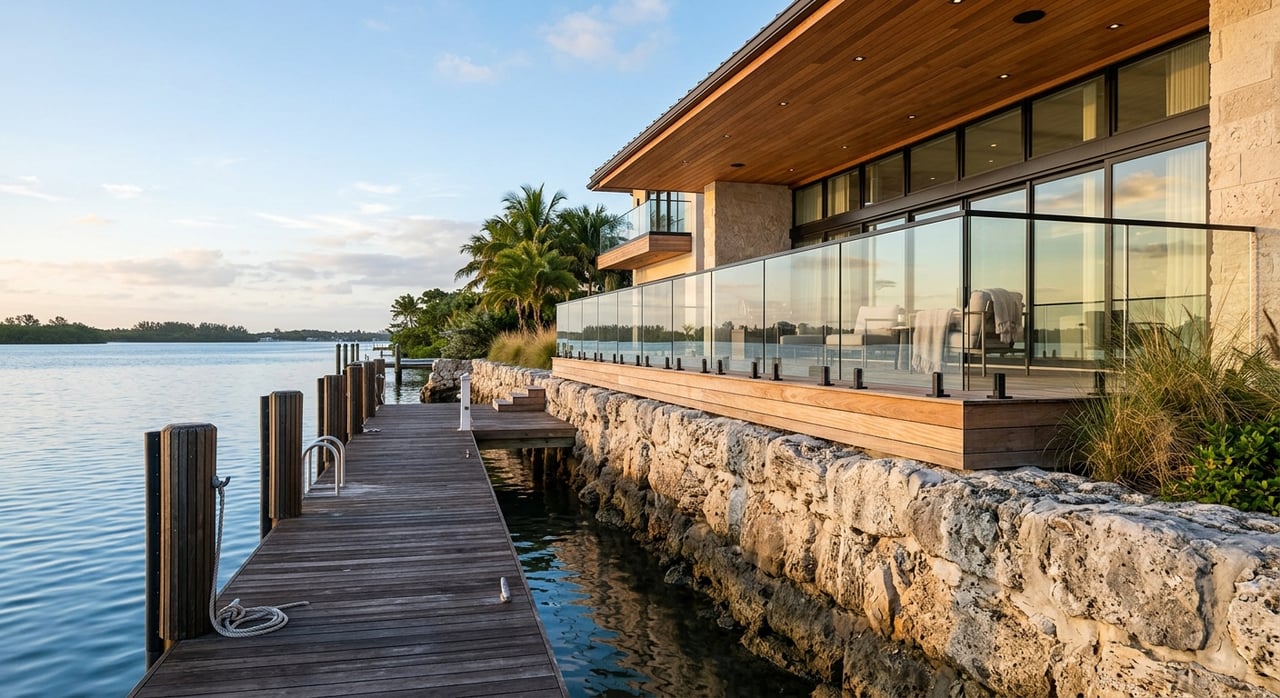
Why Lake Austin Waterfront Prices Stay So High
April 16, 2026
April 16, 2026
If you have ever wondered why Lake Austin homes can trade at a level that feels separate from much of the Central Texas waterfront market, the answer is not just square footage or finishes. Lake Austin sits unusually close to the city core, offers constant-level waterfront use, and has a shoreline that is already heavily built out and tightly regulated. When you put those factors together, you get a rare asset class that behaves more like urban luxury real estate than a typical lake home market. Let’s dive in.
Lake Austin is not a remote waterfront destination. It is a close-in reservoir within Austin city limits and west of downtown, which gives owners something few lake markets can match: direct access to waterfront living without giving up proximity to the city.
That location matters more than many buyers first realize. A City of Austin and University of Texas report notes that the city center’s highest population density sits adjacent to Lady Bird Lake and Lake Austin. In simple terms, Lake Austin offers waterfront ownership in a part of the metro where land is already highly valued.
One of the biggest reasons Lake Austin prices differently is its water profile. According to the Texas Water Development Board’s Lake Austin survey, Lake Austin is a constant-level, pass-through reservoir on the Colorado River.
For buyers, that translates into more predictable day-to-day waterfront use. Dock access, shoreline enjoyment, and boating convenience become part of the property’s practical value, not just part of the view. That level of usability supports stronger pricing because the waterfront experience is more consistent.
Scarcity is a major part of the story. The same TWDB survey describes the shoreline from Tom Miller Dam to Commons Ford as mostly residential development, with much of the developed shore protected by bulkheads.
That matters because built-out waterfront is hard to replicate. Once a shoreline is developed, there is very little room to create meaningful new supply. On Lake Austin, buyers are often competing for a fixed set of properties rather than a market that can easily expand.
On Lake Austin, scarcity is not just physical. It is also regulatory. The City of Austin’s Lake Austin boat dock and shoreline rules show that work on or near the waterfront can require permits and site plan review, and frontage may be subject to setbacks, dock limits, and restrictions on shoreline modification and access.
For owners, that means the value of existing compliant waterfront improvements can be significant. It also means you are often buying within a fixed development envelope. In practice, the market is less about creating brand-new waterfront opportunities and more about acquiring a rare one that already exists.
This is where Lake Austin separates from many other waterfront markets in Texas. It is not valued only as a recreational product. It is valued as a scarce luxury asset with immediate access to Austin.
That distinction helps explain why pricing can remain strong even when buyers are looking carefully at value. A prime Lake Austin property offers land, water access, and location in one package, and each of those pieces is difficult to replace in the same setting.
High-end pricing needs qualified demand behind it. Lake Austin benefits from being tied to a large and active luxury market. The Texas REALTORS® 2025 report on million-dollar home sales recorded 2,714 homes sold for $1 million or more in the Austin-Round Rock-San Marcos MSA from November 2024 through October 2025, representing 26.3% of residential sales dollar volume.
That is important context. Lake Austin does not rely on a thin niche of buyers alone. It sits inside a metro with enough luxury demand to sustain premium waterfront pricing, especially for homes that combine privacy, usable shoreline, and close-in access.
Luxury pricing is also shaped by where capital chooses to go. Recent Chron coverage of a $19.9 million Lake Austin mansion listing and reporting on the Four Seasons Private Residences Lake Austin project along 3,070 feet of waterfront show continued ultra-luxury attention on the lake.
These examples do not define every transaction, but they do signal the market’s position. Sophisticated buyers, developers, and sellers continue to treat Lake Austin as one of the most valuable waterfront corridors in the region.
Many buyers naturally compare Lake Austin to Lake Travis, but the two operate differently. According to the Texas Water Development Board reservoir data, Lake Travis is about 19,297 acres at conservation pool, while Lake Austin is about 1,589 acres, making Lake Travis roughly 12 times larger.
Size alone does not determine value, but replaceability does. Lake Austin offers a much smaller supply of close-in, dockable waterfront, while Lake Travis serves a larger market with a different physical and functional profile. The result is that Lake Austin often commands a premium based on scarcity and convenience, not just home size or lot dimensions.
If you boil Lake Austin pricing down to its core drivers, three stand out:
That combination is unusually hard to duplicate. As the City of Austin and University of Texas analysis suggests, the premium comes from more than just the home itself. It comes from owning a rare position in the urban fabric of Austin.
If you are considering Lake Austin, it helps to approach the market with the right lens. You are not simply comparing lake houses. You are evaluating a tightly held waterfront category where access, compliance, shoreline usability, and location can all materially affect long-term value.
That is why local knowledge matters. Understanding dock constraints, shoreline rules, and how one stretch of frontage differs from another can shape both pricing and your future use of the property.
If you own on Lake Austin, your property may deserve to be positioned as more than a standard waterfront home. Buyers in this market often pay for the combination of waterfront functionality, scarcity, and proximity to Austin, especially when those points are clearly presented.
For many sellers, that creates an opportunity for a more tailored strategy. Precise pricing, informed comparable analysis, and controlled exposure can be especially important in a market where each property has unique waterfront characteristics.
Lake Austin is a market where details carry real weight. Shoreline conditions, existing improvements, regulatory constraints, and exact location along the lake can all influence value in ways that broad market averages may miss.
That is why many buyers and sellers benefit from a more discreet, highly informed process. Whether you are evaluating a purchase, preparing to sell, or exploring private opportunities, working with an advisor who understands the nuances of Austin-area waterfront can help you move with more clarity and confidence.
If you are thinking about buying or selling on Lake Austin, Kody Hall offers place-specific guidance, discreet representation, and a concierge-level approach tailored to luxury waterfront real estate.
Stay up to date on the latest real estate trends.



Partnering with an acclaimed real estate professional is crucial to navigate the complexities of the high-end market. The luxury sphere requires vast knowledge of private sales and precision-level marketing tactics, all while maintaining client confidentiality throughout the process. Hall Realty Group provides forward-thinking processes that encompass the highest level of attention to detail. For sellers, it's imperative to analyze off-market comparables and exclusive market trends, both of which are not publicly available. In order for a buyer to achieve success, the client must be aware of exclusive listings not broadcast on the open market. These aspects complement our extensive network, directly correlating to the success of our clientele. HRG possesses superior negotiation skills honed through experience in dealing with high-value transactions. Kody understands the art of negotiation in the luxury market, including how to navigate complex offers, handle multiple bidders, and advocate effectively on behalf of their clients. HRG has a deep understanding of the luxury lifestyle and effectively communicates tailored strategies needed for the desired result.