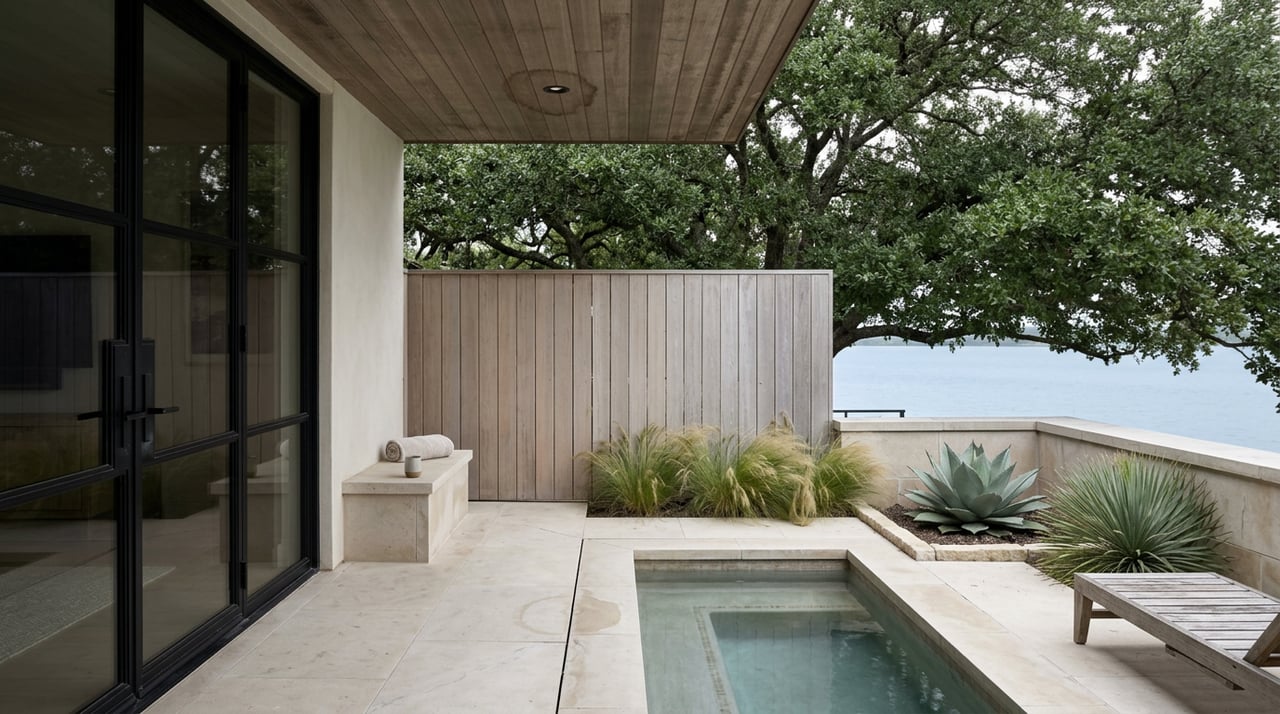
What’s New on Lake Travis This Summer Around Lakeway
August 20, 2026
August 20, 2026
Drive past Lakeway Resort & Spa on a Friday evening in August and nothing looks wrong. The pool deck is full. Boats idle at the marina next door. The lobby still smells like the same lobby it has smelled like since most of us can remember. If you didn't read the local news, you'd have no reason to think the property was in trouble at all.
But the Lakeway City Council is back at the table this week, on August 17, reassessing a funding request tied to that resort's renovation, and the paperwork behind that request tells a different story than the one visible from the shoreline. The decline was real. It just never showed up in a way a passerby could see.
In May, Trestle Studio, a boutique hotel investment firm, and its partner Sopris Capital closed on the purchase of Lakeway Resort & Spa for $37.8 million, according to Ashford Hospitality Trust's SEC filing on the deal. The 168-room property sits on an 11-acre peninsula and has been part of the Lakeway skyline since 1963, longer than most of the neighborhoods around it have existed in their current form.
On July 20, the Lakeway City Council approved more than $2 million from the city's hotel occupancy tax fund to help pay for the renovation, splitting the money between Trestle Studio and Lakeway Marina, a three minute walk down the shoreline. The first million dollars went out in July, with two more allotments of $500,000 scheduled for July 2027 and January 2028. Council approved the signage and historical restoration piece of that request outright. What it's revisiting on August 17 is the rest: funding for the parking lot, the boat ramp, and an advertising campaign meant to help relaunch the resort's image.
That distinction matters. The city is comfortable paying to fix what's physically broken. It's still working out how much it wants to spend telling people the resort is fixed.
Here's the part that doesn't show up from RM 620. In fiscal year 2022-23, Lakeway Resort & Spa generated $730,000 in hotel occupancy tax revenue for the city. By fiscal year 2025-26, that number had fallen to $485,000, a drop of roughly a third in three years. City documents attribute the decline primarily to deferred maintenance, outdated rooms, dated common area design, and pricing decisions, not to any collapse in tourism or lake traffic generally.
That's the detail worth sitting with if you live nearby. The resort didn't close. It didn't get quieter in any way you'd notice by driving past. It just slowly generated less tax revenue for the city every year, a signal that only exists in a budget line, invisible to anyone judging the property by how busy the parking lot looks on a Saturday. Assistant City Manager Ashby Grundman told council the renovation is projected to grow that HOT contribution back to $875,000 by 2031, with the city's investment repaid through increased tax collections by 2033 and the full commitment, including the marina grant, paid off by 2035. This isn't a quick refresh. It's a nine year bet that a redesigned resort brings back tax revenue the old one had been quietly losing since at least 2023.
Lakeway Resort still generates 48 percent of the city's total hotel occupancy tax collections, more than any other property in town. That's precisely why its slow fade mattered enough to warrant public money to reverse it.
The renovation itself covers more than 24,000 square feet of indoor and outdoor gathering space, a redesign of the food and beverage program, expanded wellness offerings, and updated guest rooms. Trestle Studio's portfolio includes properties like The Hotel Chalet in Chattanooga and the forthcoming Sítio El Tropicano in San Antonio, and the company has framed this project the same way it frames those.
"There are very few properties where the sense of place is so profound," Trestle founder Jake Lamstein said when the acquisition was announced. "Lakeway Resort & Spa is one of them. Its relationship to Lake Travis, to the landscape, to the story of this community, that's what drew us to this acquisition."
That word, story, keeps showing up in how Trestle talks about the project, and it's worth noticing why. Bridgette Summers, the firm's investment officer, told council in July, "We already started retelling the story. As we do that, there's a certain elevation of the guest experience that's going to come with that." A renovation fixes the rooms. The advertising line item the council is still weighing this week is the part meant to fix how the property is perceived, separate from how it actually functions. Both pieces are part of the same repair, and the city is being asked to fund both.
While all of that was working its way through council chambers, a much smaller operation opened down the shoreline in Spicewood without a permit hearing or a tax grant attached to it. Austin Surf Lodge opened there on Memorial Day as a lakefront micro-resort and wellness club, offering cabins and suites that can be rented individually or combined for groups, along with paddleboarding, kayaking, a sauna, a hot tub, wakesurfing, and pontoon charters open to overnight guests and the general public.
No city council vote. No hotel occupancy tax subsidy. No nine year payback model. Just a smaller footprint, built new instead of renovated, capturing the same appetite for lakefront hospitality that Lakeway Resort has spent three years failing to hold onto with its existing building. The contrast doesn't mean the demand for a place like Lakeway Resort has disappeared. It means the demand for a specific 1963 building, priced and designed the way it had been for years, had quietly thinned out while a newer, smaller concept absorbed the interest instead.
The resort story is the biggest one, but it's not the only proof that the corridor around Lakeway, Spicewood, and Bee Cave has been in motion this year.
None of these required a council vote. They're the ordinary churn of a place that's still growing, sitting right next to the one story that did require public money to fix.
The lesson isn't that Lakeway Resort is in crisis or that the corridor is struggling. It's the opposite kind of lesson, and a more useful one if you live nearby. A landmark can look completely unchanged for years while the numbers underneath it move in a direction nobody driving past would catch. The pool deck being full on a Friday tells you nothing about whether the property is generating the tax revenue it used to. The only place that shows up is in a budget filing most residents will never open.
If you want to know what's actually shifting around Lake Travis, the city council agenda and the hotel occupancy tax fund tell you more than the view from the road ever will. That's true of a resort, and it's just as true of a home's value long before a For Sale sign ever goes up.
If you're weighing what a shift like this means for a specific property on the water, that's the kind of read Kody Hall does for a living. Reach out to request private access to the data behind the headlines.
Stay up to date on the latest real estate trends.
Partnering with an acclaimed real estate professional is crucial to navigate the complexities of the high-end market. The luxury sphere requires vast knowledge of private sales and precision-level marketing tactics, all while maintaining client confidentiality throughout the process. Hall Realty Group provides forward-thinking processes that encompass the highest level of attention to detail. For sellers, it's imperative to analyze off-market comparables and exclusive market trends, both of which are not publicly available. In order for a buyer to achieve success, the client must be aware of exclusive listings not broadcast on the open market. These aspects complement our extensive network, directly correlating to the success of our clientele. HRG possesses superior negotiation skills honed through experience in dealing with high-value transactions. Kody understands the art of negotiation in the luxury market, including how to navigate complex offers, handle multiple bidders, and advocate effectively on behalf of their clients. HRG has a deep understanding of the luxury lifestyle and effectively communicates tailored strategies needed for the desired result.