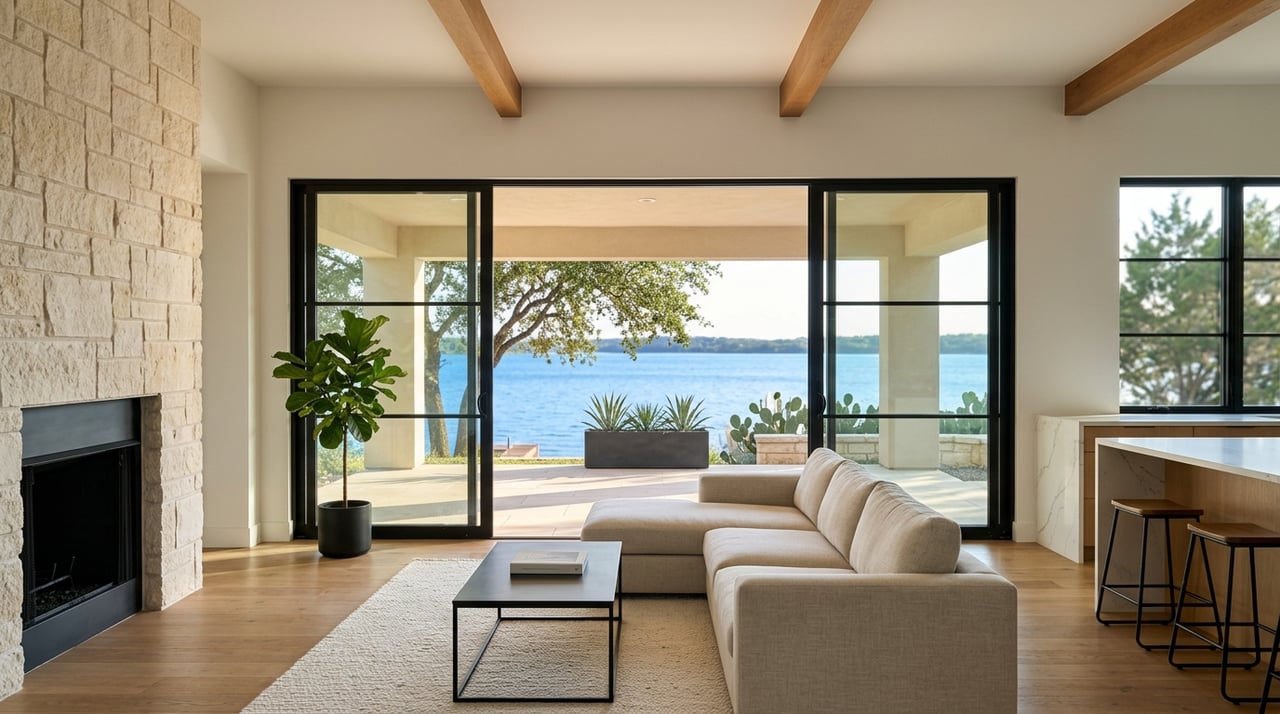
How to Buy Inks Lake Waterfront Homes in a Tight Market
June 25, 2026
June 25, 2026
If you have been watching Inks Lake waterfront homes, you already know the challenge: there are only so many shorelines to go around, and even fewer properties that truly fit your goals. In a market like this, it is easy to feel pressure to move quickly while also worrying about missing an important detail. The good news is that a calm, informed approach can help you compete wisely, protect your downside, and recognize real value when it appears. Let’s dive in.
Inks Lake is a relatively small Highland Lakes reservoir on the Colorado River west of Burnet. The Texas Water Development Board notes that the lake is owned and operated by LCRA, and Texas Parks and Wildlife lists it at 831 acres. That smaller footprint matters because limited waterfront naturally means limited supply.
The shoreline is also constrained by how the lake is bordered and owned. Texas Parks and Wildlife says Inks Lake State Park covers about one-third of the eastern shoreline, while LCRA notes that most shoreline around the Highland Lakes is privately owned. In simple terms, there is only so much waterfront that can come to market.
That scarcity shows up in public inventory snapshots. Current lake-focused portals show only single-digit to low-double-digit visible listings, with one source showing 8 active listings and another showing 11 homes for sale. For buyers, that means your search on Inks Lake behaves more like a micro-market than a broad county-wide home search.
Burnet County offers a much larger overall housing market than the lakefront slice around Inks Lake. HLAoR February 2026 quick stats show 1,252 active residential listings across the county, with TRERC data in the same report showing 162 average days on market and 9.5 months of inventory. Those county numbers can be useful for context, but they do not tell the full story for true waterfront property.
Inks Lake waterfront is narrower, more specialized, and more fragmented than the broader market. You are not simply buying a house in Burnet County. You are buying a specific shoreline position, water access experience, and ownership profile that can be hard to replace.
That is why broad market averages can sometimes create false expectations. A lakefront home may sit longer because the buyer pool is more selective, but a well-positioned property with usable shoreline or dock potential can still require a fast, confident decision. Thin inventory often creates both longer searches and sharper moments of competition.
Not all waterfront is equal. In a low-inventory market, buyers sometimes focus too much on the fact that a property is on the water and not enough on how the waterfront actually functions. The shape of the lot, access to the shoreline, and day-to-day usability can have a major effect on long-term value.
A home with straightforward access to the lake may serve you very differently than one with a steeper approach, limited dock options, or shoreline constraints. When choices are limited, it helps to separate emotional appeal from practical enjoyment. The best purchase is not always the one with the most dramatic photos, but the one that works well over time.
Dock usability is a major part of the equation on Inks Lake. LCRA’s dock standards state that the maximum dock distance from shore on Inks Lake is 35 feet. LCRA also says property owners must verify that they own the submerged land before building a dock or floating structure.
That means lakefront ownership does not automatically equal dock rights. Before you assume a property can support your boating plans, you need to understand what is already permitted, what is legally possible, and how the current setup complies with LCRA standards. This is one of the most important differences between a home that merely touches the lake and one that supports the lifestyle you want.
Inks Lake is often viewed as one of the more stable Texas reservoirs, which is part of its appeal. LCRA says the smaller pass-through lakes are generally operated within a small range, and Texas Parks and Wildlife notes about 1 foot of annual fluctuation. Water Data for Texas showed Inks Lake at 95.4% full and 887.20 feet on June 9, 2026.
Still, stable does not mean fixed. LCRA notes that these lakes can fluctuate during floods, and occasional lowering can happen for aquatic vegetation management or for dock and retaining wall repairs. As a buyer, you should evaluate how a property performs not only on a perfect lake day, but also during drawdowns and maintenance periods.
Floodplain review is essential with any waterfront purchase. Burnet County states that buyers can obtain flood zone determinations, FIRMs, flood insurance purchase requirements, floodplain development regulations, and elevation certificates through Development Services. That is information you want early, not after you are emotionally committed.
This step helps you understand both current conditions and future limitations. It may affect insurance, improvements, and how you think about risk over the life of ownership. In a market where choices are limited, floodplain clarity helps you make a measured decision instead of an urgent one.
A surprising number of waterfront buyers assume the lot automatically includes the rights needed for a dock. LCRA is clear that owners must confirm ownership of submerged land before building a dock or floating structure. If a property already has a dock, you also want to understand whether it meets current requirements.
LCRA can issue violations if docks are too far from shore, unanchored, or adrift. That makes it important to verify more than just the presence of a structure. You want to know whether the setup is legal, functional, and aligned with your intended use.
LCRA occasionally lowers pass-through lakes like Inks Lake for aquatic vegetation management and to allow dock and retaining wall repairs. Buyers should ask how the property handles those periods. A seller’s experience during maintenance windows can give you useful insight into access, shoreline condition, and dock practicality.
This is also where local, lake-specific perspective matters. Two homes may look similar in photos, but perform very differently when conditions change. In a thin market, understanding those differences can help you avoid paying a premium for a property with hidden tradeoffs.
If you plan to boat regularly, zebra mussel rules should be part of your ownership planning. Texas Parks and Wildlife states that Inks Lake has zebra mussels, that draining water is required by law, and that possession or transport is illegal. This is especially relevant if you expect to move a boat between lakes.
For many buyers, this is not a deal breaker. It is simply part of responsible lake use. Still, it is better to know the operational realities of ownership before you buy than to learn them later.
One simple mistake can narrow your options too much. Current public Inks Lake results span both Burnet 78611 and Buchanan Dam 78609, so searching only one ZIP code may cause you to miss viable properties. In a market this thin, widening your search geography is one of the easiest ways to improve your odds.
You should also think in terms of shoreline and access rather than mailing address alone. Waterfront searches often behave differently from standard residential searches. A broader, lake-first strategy usually gives you a more accurate view of what is actually available.
Public inventory is only part of the picture. Several Inks Lake waterfront properties are labeled off market on public portals, which supports the idea that buyers should not rely only on currently active listings. Some opportunities may surface through agent networks, private outreach, or other less visible channels.
That matters even more in a boutique waterfront segment. If your search depends only on what you happen to see on a portal one weekend, you may miss the best-fit property. A more proactive approach helps you stay ahead of the market instead of reacting to it.
This is one of the most unusual parts of buying in a low-inventory waterfront market. You may search longer because there are so few real options, yet when a strong property appears, you may need to decide quickly. Public lake portals show average days on market around 145 on one source, but that number alone does not tell you how individual high-quality properties behave.
The key is to do your homework before the right listing appears. If you already know your must-haves, budget, risk tolerance, and shoreline priorities, you can move with clarity instead of haste. That is how you stay disciplined in a market that often feels emotional.
In a market this thin, list price is only one piece of the puzzle. A smart offer strategy should focus on shoreline usability, dock rights, lot geometry, condition, and true comparable sales. That is especially important when visible inventory is fragmented and the number of relevant waterfront comps is limited.
You also want to understand what makes one Inks Lake property genuinely harder to replace than another. A home with better water access, stronger dock utility, and cleaner due diligence may deserve more aggressive terms than a property with unresolved questions. Precision matters more than broad assumptions.
This is where disciplined local analysis can protect both your lifestyle goals and your purchase price. In a market with scarce supply, the right move is not always to pay the most. It is to pay confidently for the property characteristics that truly matter.
If you are considering an Inks Lake purchase, a discreet, lake-specific strategy can make the search feel far more manageable. For tailored guidance, private inventory insight, and a more precise read on waterfront value, connect with Kody Hall.
Stay up to date on the latest real estate trends.







Partnering with an acclaimed real estate professional is crucial to navigate the complexities of the high-end market. The luxury sphere requires vast knowledge of private sales and precision-level marketing tactics, all while maintaining client confidentiality throughout the process. Hall Realty Group provides forward-thinking processes that encompass the highest level of attention to detail. For sellers, it's imperative to analyze off-market comparables and exclusive market trends, both of which are not publicly available. In order for a buyer to achieve success, the client must be aware of exclusive listings not broadcast on the open market. These aspects complement our extensive network, directly correlating to the success of our clientele. HRG possesses superior negotiation skills honed through experience in dealing with high-value transactions. Kody understands the art of negotiation in the luxury market, including how to navigate complex offers, handle multiple bidders, and advocate effectively on behalf of their clients. HRG has a deep understanding of the luxury lifestyle and effectively communicates tailored strategies needed for the desired result.